
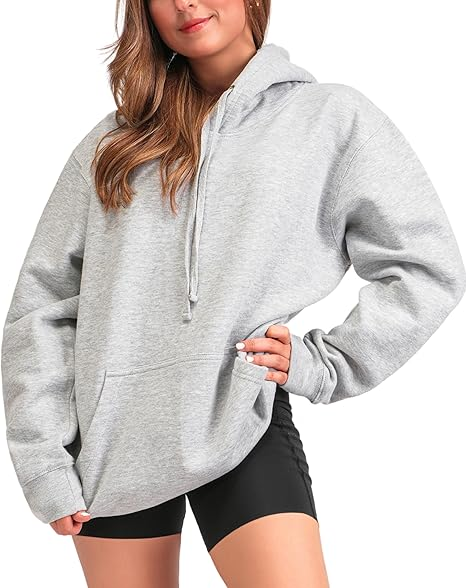
The Unseen Backbone: The Technical Role of Seams and Stitching in Garment Longevity
In the architecture of the simple hooded pullover, the most crucial elements are paradoxically the most invisible: the seams and the stitching. These lines of thread are the structural backbone of the garment, determining its final fit, its resilience under stress, and its ultimate lifespan. Far from being a uniform process, the sewing of a high-quality hooded staple involves a sophisticated application of textile engineering, selecting specific stitch types for specific, high-tension areas to maximize both comfort and durability. This detailed attention to thread and tension is what separates a long-lasting, reliable piece of clothing from a disposable item.
The majority of the pullover’s construction relies on two primary categories of stitches: the overlock stitch and the coverstitch. The overlock stitch, often called a serger stitch, is the fundamental workhorse of knitwear assembly. It uses multiple threads (typically three, four, or five) to simultaneously join two or more pieces of fabric while wrapping the raw fabric edges to prevent fraying. This stitch is ideal for the body seams—the sides of the torso and the underarm—because it creates a strong, elastic joint that can stretch with the synthetic fabric blend without snapping. The strength is derived from the interlocking loops of thread, which distribute the stress across a wider area. Crucially, a high-quality overlock seam will use a thread with similar elasticity to the spandex in the fabric itself, ensuring that when the wearer stretches their arm or chest, the seam stretches with the fabric rather than restricting it. Poorly executed overlocking, often identifiable by seams that look too tight or too loose, is the first point of failure in cheaper garments, leading to blow-outs under stress.
The flatlock seam, a specialized variation, is paramount for comfort. Unlike the overlock seam, which leaves a slight ridge or bulk on the interior of the garment, the flatlock stitch is designed to lay completely flat against the skin. This seam is non-chafing and is primarily used in high-friction zones—particularly the shoulder seams (especially in raglan sleeve designs) and along the hood where continuous movement occurs. By eliminating the raised edge, the flatlock stitch vastly improves the tactile comfort of the pullover, making it suitable for long periods of wear or layering without irritating the skin. This stitch is often recognizable by the ladder-like appearance on the exterior and the smooth, overlapping layers of fabric on the interior. Its use is a hallmark of a garment designed with ergonomic comfort as a top priority.
The coverstitch is the essential finishing and detailing stitch, most commonly found at the hems, cuffs, and the waistband. Its function is to secure the raw edge of the fabric to the main body, creating a clean, professional finish while providing maximum elasticity for these high-movement openings. The coverstitch is recognizable by two or three parallel lines of stitching on the exterior and a characteristic zigzag loop on the interior. The strength and flexibility of the coverstitch ensure that the elasticized cuffs and waistband—which are constantly stretched when the garment is pulled on and off—retain their shape and do not pucker or unravel. The quality of the coverstitch directly impacts the lifespan of the garment’s openings, which are subjected to more cyclical stress than any other part of the garment.
Beyond the type of stitch, the thread itself is a silent hero. High-tenacity polyester threads are typically used, chosen for their inherent resistance to UV light, chemicals (detergents), and abrasion. The thread must be strong enough to withstand the stress of the sewing machine and the tension of repeated movement, yet fine enough to blend seamlessly into the knit fabric. Even the number of stitches per inch (SPI) is a critical quality indicator. A higher SPI (usually 10-14 stitches per inch for durable knitwear) means more material is secured in a given length, resulting in a stronger, more resilient seam, even if it adds slightly to the production time. The pullover’s backbone, therefore, is a carefully calculated matrix of thread density, stitch type, and placement, proving that simplicity in appearance requires complexity in engineering.
https://www.amazon.com/Aon-Apparel-Womens-Grey-Hoodie/dp/B0CV27ZFW6/ref=sr_1_50?crid=3U78DVJW886EP&dib=eyJ2IjoiMSJ9.kKkDo0pzqU2NsPFziGSMx4iPsF9SV7ZDE1SULlOdX_yYt5vxyqm0Ez3JK8DdjqBIY9Qlqf4fazjdi4LlnMp_sIn6I8eM3AdOdbVcctiX23oOyuXOmhkF18IwVjt40sZeFFb7285XgEMVK2mj9ZICDgrBJJ5ULwl7c7iOFNTIM3L8u2oTyfpUw9sENtDa8lV1RZjfdi9I7JhUY0LjM6N_DREW-WtG9J3F7iq7A78gl7_JnWL9-_hQPaOhlxtyT_SwArFFxG9RSd-0dZ904xf6gDvjp3JaHNhKWPSqHc9kCFc.GsH75Ams5uwKOP0wPZ6HIQHRLrjnjKSTrnjaGtAmrQk&dib_tag=se&keywords=%E5%8D%AB%E8%A1%A3&qid=1758966396&sprefix=we%2Caps%2C728&sr=8-50&xpid=caSCLuG81QdWN&th=1&psc=1